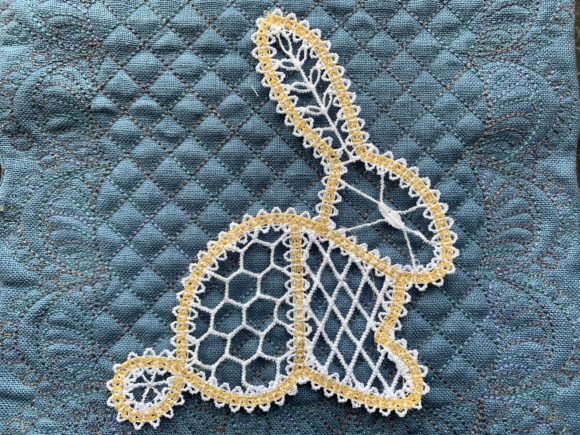
Lace Bunny
A Delicate Embroidery Design for Handmade Projects
The first thing that strikes me about Lace Bunny is its subtle elegance. It’s not a bold statement piece, but rather a refined addition to any embroidery project. The Battenburg lace pattern gives it a classic, handcrafted feel that feels both modern and timeless. This design carries a soft, whimsical energy that makes it ideal for Easter-themed items or as a subtle accent in everyday handmade products.
Visual Personality and Project Fit
Lace Bunny has a delicate, intricate texture that suggests a level of detail worth investing in. The pattern mimics the look of handmade Battenburg lace, which means it’s rich in visual interest without being overwhelming. It’s a great fit for projects where subtlety meets charm—like embroidered pillow covers, baby clothes, or personalized gifts. Its shape is rounded and approachable, making it suitable for both small and medium-sized items.
I imagine using Lace Bunny on a custom tote bag design. The lace motif would add a touch of sophistication to a simple canvas tote, transforming it into a unique, handcrafted item. It could also work well on an embroidered patch, adding a decorative element to a cap or apron. The design's scale is versatile enough to be used on a variety of surfaces, from fabric to felt, making it adaptable to different craft business needs.
Real-World Embroidery Considerations
When considering how Lace Bunny performs in real-life embroidery scenarios, there are several factors to keep in mind. First, the design's complexity can affect stitch density and file size. While this isn’t explicitly stated, it’s something to test before committing to a large-scale project. A high stitch count may require careful planning, especially when working with smaller hoop sizes or detailed areas.
For example, if I were creating a sweatshirt embroidery featuring Lace Bunny, I’d need to ensure the design fits within the hoop size and doesn’t cause issues with thread tension or fabric distortion. Testing the design on scrap fabric is essential to identify any potential problems before moving to the final product. Also, the use of stabilizer becomes critical, especially when working with thin or stretchy fabrics like cotton or linen.
Another consideration is the contrast between the design and the fabric. Lace Bunny features intricate details that can easily blend into dark or textured backgrounds. To maintain clarity, I’d recommend testing the design on both light and dark fabrics, and adjusting thread colors accordingly. A white or pastel background often enhances the visibility of such delicate patterns.
Design Limitations and Best Practices
While Lace Bunny is a beautiful design, it does have some limitations. Its intricate nature means it may not perform well on very small hoops or curved surfaces like caps. The detailed corners and dense stitch areas can cause issues with stitching accuracy, especially on fabrics that stretch or fray easily. Additionally, the design might not be ideal for frequent washing, as repeated exposure to water and detergents can dull the embroidery over time.
For commercial embroidery purposes, it’s important to confirm licensing terms before selling finished products or digital files. As an Etsy seller or small shop owner, you want to ensure you’re using the design legally and ethically. Always review the terms of use provided by the designer to avoid any potential legal issues.
Enhancing Visual Appeal and Product Value
Lace Bunny has the potential to elevate the visual appeal of a handmade product. Its intricate details and soft texture make it stand out in a crowded market. When applied to a personalized gift, such as a holiday ornament or a custom embroidered napkin, it adds a layer of thoughtfulness that resonates with customers.
From a customer perspective, the design’s handmade quality contributes to the perceived value of the product. Handmade items often carry a sense of authenticity and care, which can help build trust and loyalty. For craft business owners, incorporating Lace Bunny into your product line can differentiate your brand and attract a niche audience looking for unique, artisanal designs.
Practical Designer Notes
- Test on scrap fabric: Always check the design on a sample before applying it to a finished product.
- Review stitch density: Ensure the design stitches evenly and doesn’t cause puckering or distortion.
- Confirm hoop size: Choose a hoop that accommodates the design’s scale without stretching the fabric.
- Use proper stabilizer: Especially on stretchy or thin fabrics, stabilizer helps maintain shape and stitch integrity.
- Check thread color contrast: Optimize visibility by selecting thread colors that complement the fabric.
- Test in black and white mockups: This helps identify any potential issues with detail clarity.
- Consider fabric texture: Some textures may enhance or detract from the design’s appearance.
- Ensure compatibility: Confirm that the digital embroidery file works with your machine and software.
- Verify licensing: Before selling finished products, make sure you have the right to do so.
In summary, Lace Bunny is a versatile and elegant design that can bring a touch of refinement to a wide range of embroidery projects. Whether you're creating a custom apparel piece, a holiday gift, or a small shop product, this design offers both aesthetic and functional value. With careful planning and attention to detail, it can become a standout feature in your handmade creations.